Summary:
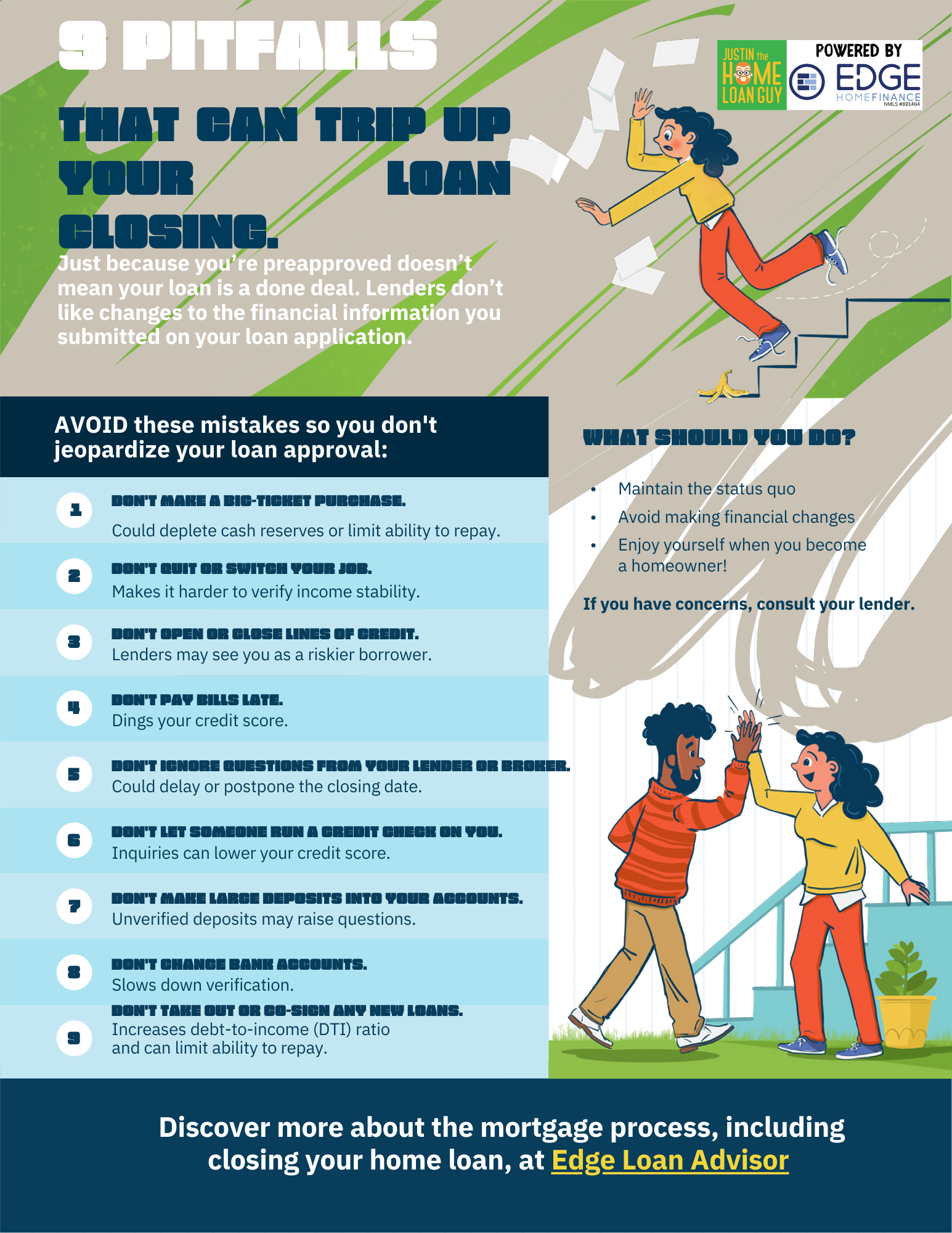
Getting preapproved is a great first step in buying a home—but it doesn’t guarantee a clear path to closing. Many buyers unknowingly make mistakes between preapproval and closing that could delay or even derail their mortgage. Let’s walk through 9 common missteps you’ll want to avoid so you can confidently coast to closing day.

1. Don’t Make Big Purchases
Thinking about upgrading your couch or grabbing a new car for the driveway? Hold off. Large purchases can drain your savings or increase your monthly debts—both of which could affect your loan approval.
What to do instead: Keep your spending habits the same until after you close on your home.
2. Don’t Quit or Switch Your Job
Even if it’s a better opportunity, a job change mid-mortgage can raise red flags. Lenders want to see stable, consistent income to feel confident you’ll make your payments.
What to do instead: If a job change is unavoidable, talk to your loan officer right away.
3. Don’t Open or Close Credit Accounts
Opening new lines of credit—or even closing old ones—can impact your credit score and change your debt-to-income ratio. Both can make you look like a riskier borrower.
What to do instead: Leave your credit alone unless your lender gives the green light.
4. Don’t Pay Bills Late
This one’s straightforward: even one late payment can hurt your credit score, which may affect your loan terms or approval.
What to do instead: Set reminders or autopay to keep everything current.
5. Don’t Ignore Lender Requests
If your lender or broker asks for documents or clarification, don’t sit on it. Delays in response can push back your closing or worse—put your loan at risk.
What to do instead: Respond quickly and provide exactly what they request.
6. Don’t Allow New Credit Inquiries
Every time someone checks your credit, it can take a small hit. Too many inquiries at once? Lenders might think you’re desperate for credit.
What to do instead: Politely decline offers that require a credit check until you’ve closed.
7. Don’t Make Large Deposits Without a Paper Trail
Unexplained or sudden deposits into your account can raise questions during underwriting.
What to do instead: Keep a record of where the money came from—gifts, bonuses, etc.—and talk to your lender before moving large sums.
8. Don’t Change Bank Accounts
Switching banks can make it harder for your lender to track your financial history, verify deposits, or confirm reserves.
What to do instead: Wait until after you’ve closed to change accounts.
9. Don’t Take Out or Co-Sign New Loans
Whether it’s a car loan, personal loan, or helping a friend with theirs—adding new debt can mess with your debt-to-income ratio.
What to do instead: Hold off until you’ve got the keys to your new place.
Bottom Line:
Even if you’re preapproved, your loan isn’t final until you sign at closing. Keeping your finances steady during this time is the key to avoiding surprises. When in doubt? Call your lender before making any changes.
Discover more about the mortgage process, including
closing your home loan, at Edge Loan Advisor
Leave a Reply